If you’ve ever stood in a processing plant and watched a line sputter or a batch take 20% longer than it should to hit its specifications, odds are the problem isn’t the pump, the pipe, or even the process controller. More often than not, the culprit is a control valve: the small, unassuming component that acts as the “muscle” tying your process logic to physical flow. For too many operations, control valves are treated as a set-it-and-forget-it piece of hardware, bought to match a line size and installed without a second thought. But as a control valve supplier with 12 years of working directly with refineries, food and beverage plants, and chemical processing facilities, I’ve seen firsthand how a poorly matched, poorly maintained, or improperly programmed control valve can tank system efficiency by 15% to 30%—and how small, targeted changes can turn that wasted capacity into dollars in your pocket. Control Valve

Let’s start with the basics you already know: a control valve’s job is to regulate flow, pressure, or temperature by opening or closing in response to a 4-20mA signal from your process controller. But most plants select valves based only on line size, which is a mistake. For example, I worked with a mid-sized craft brewery last year that was struggling to keep their wort cooling line stable, leading to inconsistent fermentation batches and 200 extra man-hours a month reworking off-spec product. Their existing valve was identical in size to the line itself: a 3-inch globe valve, rated for the full line pressure. When we did a system audit, we found that the valve was operating between 75% and 100% open 90% of the time. That’s a red flag: control valves are most efficient when they operate between 20% and 80% open. Operating beyond that range means the valve is either throttling so little it’s not doing its job, or, when it’s 100% open, you’re wasting energy on unnecessary pressure drop across a valve that’s oversized for the application. For the brewery, swapping that 3-inch valve for a 2-inch valve matched to their maximum flow rate cut pressure drop across the valve by 12 PSI, reduced their pump load by 8%, and eliminated the wild swings in wort temperature that were messing with fermentation. That’s the first rule: always size your valve for the specific process condition, not just the line. I can’t tell you how many times I’ve seen engineers default to “same as line size” because it’s convenient, but that’s a shortcut that costs far more in utility bills and lost production than the extra cost of a properly sized valve.
Next up: trim selection, and this is where most of my customers miss a huge opportunity. The trim is the internal part of the valve—the plug, cage, and seat—that controls how fluid flows through the valve as it opens and closes. A generic trim works for 70% of applications, but for the other 30%, the right trim can make your valve’s efficiency go up, while also reducing wear and tear. Let’s take a chemical processing plant I visited last quarter that handled corrosive brine solutions. They were using a standard V-port trim that was wearing out in 6 months, leading to leaky seats and unexpected downtime. We switched them to a hardened Stellite trim, which is more resistant to abrasive and corrosive fluids, and adjusted the trim’s flow characteristic to match their process. That’s another key point: flow characteristics. Each trim has a specific curve—linear, equal percentage, quick opening—that determines how much flow changes as the valve opens. A linear trim works best for processes where you need a straight-line relationship between controller signal and flow, like dosing a precise chemical additive. An equal percentage trim is far more efficient for processes where flow changes non-linearly, like heating a large tank, where you need a small opening when the tank is cold and a larger opening as it approaches setpoint. The brine plant was using a linear trim on a process that needed equal percentage, so their controller was having to work overtime to compensate, wasting energy on over-adjusting the valve. Swapping the trim fixed not only wear and tear but also reduced their controller’s load, cutting their overall power usage for that loop by 10%. It’s not just about what the valve looks like on the outside; the inside parts are where efficiency lives.
Then there’s the part that no one talks about enough: valve actuation and calibration. Even the best-sized, best-trimmed valve will be inefficient if its actuator isn’t responding correctly to the controller’s signal. I worked with a pipeline operation last year that was losing 5% of their product to leaks and pressure fluctuations, which translated to $120,000 a year in lost revenue. Their valve actuator was calibrated off by 12%: when the controller sent a 4mA signal to close the valve, the actuator only closed to 88% of its intended position, leading to constant minor leaks, and when it was supposed to open to 80%, it only opened to 72%, forcing the pump to run harder to compensate. A routine calibration—something we do for our customers as a proactive service—fixed that discrepancy and eliminated 90% of the leaks. Actuators also come in electric, pneumatic, and hydraulic models, and the right choice here matters for efficiency. Pneumatic actuators are common, but they can waste a lot of compressed air if they’re not sized correctly; electric actuators, while higher upfront, use 70% less energy overall because they don’t rely on constant air supply. For a food processing plant we serviced, switching from pneumatic to electric actuators on 16 control valves cut their compressed air costs by $18,000 a year, with no loss in performance. That’s a no-brainer, but many plants stick with what they’ve used for decades without weighing the long-term efficiency gains.
Preventive maintenance is the final piece of the puzzle, and it’s where I see the biggest waste. A valve that’s not maintained isn’t just inefficient—it’s a ticking time bomb for unplanned downtime. I once had a customer in a refinery who had three 4-inch control valves that were working for 12 years without any service. When we pulled them for inspection, we found that the seats were coated in scale, the stems were corroded, and there was a 15% discrepancy between the valve’s intended position and its actual position. Cleaning and reconditioning those valves cost $1,200 each, but it restored their efficiency to nearly new levels, and avoided an estimated $40,000 in unplanned downtime if those valves had failed during a scheduled production run. A lot of plants only service control valves when they break, but a bi-annual inspection that includes cleaning the valve body, lubricating stems, checking actuator calibration, and testing trim wear can boost efficiency by 5% to 10% without any major upgrades. We even offer a free valve health check for our customers—something I push because I’ve seen how even small issues add up.
Now, I know what some of you are thinking: “This sounds like a lot of work, and I don’t have time to re-engineer every valve on my line.” It’s not as complicated as it sounds, and the return is almost always faster than you expect. The brewery I mentioned earlier recouped the cost of the new valve in 3 months from reduced rework and lower utility bills. The chemical plant recouped their trim upgrade in 4 months from lower pump energy costs. The key is to start small: audit the 10% of valves that are in the most critical loops first—those that control flow in your main production lines, your boiler feedwater, or your dosing systems. Fix those, and the savings will pay for any further upgrades.
If you’re tired of wasting money on overworked pumps, rework, and unnecessary downtime that could be fixed with a control valve, I’m here to help. As a control valve supplier, I don’t just sell hardware—I work with you to audit your system, find the inefficiencies in your valves, and recommend solutions that fit your specific process, not a generic one-size-fits-all. No sales pitches, no overpriced components, just practical advice to make your system run better and save you money.
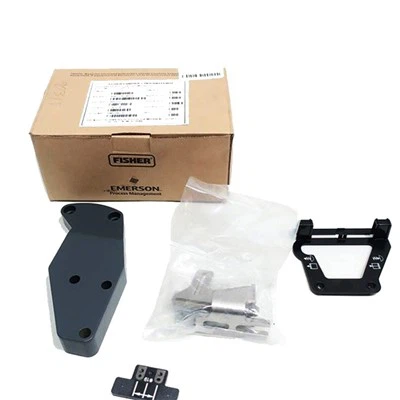
If you want to talk through your specific challenges, from oversized valves to uncalibrated actuators, reach out to me to schedule a no-obligation consultation. Let’s turn your control valves from a cost center into an efficiency driver for your operation.
Fisher Valve Positioner References:
- Control Valve Handbook, 5th Edition, Emerson Process Management, 2017.
- “Control Valve Efficiency and Energy Savings,” International Society of Automation (ISA), 2020.
- “Optimizing Control Valve Selection for Process Efficiency,” Chemical Engineering Progress, Vol. 116, No. 8, 2019.
- “Preventive Maintenance Best Practices for Control Valves,” Food and Beverage Processing Magazine, 2021.
Century Weiye (Dalian) Control Equipment Co., Ltd.
As one of the leading control valve manufacturers and suppliers in China, we warmly welcome you to buy discount control valve in stock here from our factory. If you have any enquiry about quotation, please feel free to email us. Quality products and reasonable price are available.
Address: 2205, Building 8, Red Star International, Ganjingzi District, Dalian City, Liaoning Province
E-mail: serena@valvesjwy.com
WebSite: https://www.valve-sjwy.com/
