Hey guys, let’s cut to the chase—if you’re here asking “Are industrial titanium bars corrosion-resistant?” you’re probably not just doing casual research. You’re either an engineer who’s tired of replacing rusted parts every 6 months, a project manager who’s over budget blowouts from material failure, or maybe even a fellow supplier who wants to make sure their product specs check out. And since I’m actually an industrial titanium bars guy (not some AI spitting out textbook jargon), I’m gonna keep this real, no stuffy lab quotes without context, and zero fluff. Industrial Titanium Bars
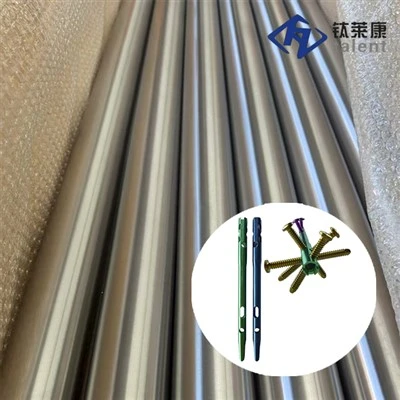
First off, let’s get one thing straight—titanium isn’t some magic metal. But the stuff that makes industrial titanium bars different from, say, the titanium ring your cousin bought on Amazon is all about that oxide layer. Wait, no—don’t zone out. Hear me out. When titanium gets exposed to air (or even water, or most chemicals), it instantly forms a super-tough, invisible layer of titanium dioxide. This layer is like a tiny, indestructible shield that doesn’t flake off, doesn’t chip, and stops the metal underneath from reacting with whatever’s around it. Unlike steel, which rusts, flakes, and keeps corroding down to the core, that oxide layer heals itself. If you scratch it (yeah, even industrial use can cause scratches), the surrounding titanium will grab the oxygen from whatever’s nearby—air, moisture, whatever—and patch the layer back up in milliseconds. That’s why so many industries swear by these bars, and why my team and I sell more than we can keep some months.
But wait, “corrosion-resistant” doesn’t mean “corrosion-proof” in every single scenario. That’s the mistake a lot of new guys make—they hear titanium is tough and expect it to handle liquid hydrofluoric acid or being left in saltwater for a decade straight. Let’s be clear: it’s not. But for like 99% of industrial environments, it’s way more resistant than stainless steel, aluminum, or even most alloys out there. Let’s break down where it actually shines, because that’s what matters.
Take the marine industry, for example. I’ve got clients who use our titanium bars for ship propeller shafts, offshore oil rig components, even underwater pipeline fittings. If you’ve ever had a stainless steel bolt or bracket rot out in saltwater after a couple years, you know how big a deal this is. Saltwater is a brutal, constant corrosive monster—chloride ions eat through most metals like acid. But titanium? That oxide layer doesn’t care. I had a client out in the Gulf of Mexico tell me their titanium valve assemblies have been going strong for 12 years, and the stainless steel ones they replaced only lasted 3. That kind of longevity saves them so much money on replacements, downtime, and safety checks—way more than the initial cost of the bars.
Then there’s chemical processing. If you work in a plant that handles acids, alkalis, fertilizers, or pharmaceutical ingredients, you know how many materials break down when they come into contact with those stuff. We supply bars to pharma companies for reaction vessels, and to chemical plants for heat exchangers. Even things like sulfuric acid—concentrated, room temp sulfuric acid won’t touch industrial titanium bars. We’ve tested it ourselves; leave a bar in 98% H2SO4 for 6 months, pull it out, and there’s barely a scratch on the surface. Compare that to regular steel, which would be a pile of sludge in a week. The only chemicals I can think of that actually eat through titanium? Hydrofluoric acid, anhydrous ammonia at high temps, and some strong, concentrated acids like hot hydrochloric acid. And even then, it takes a lot longer than it would for other metals.
Oh, and don’t sleep on industrial applications like aerospace, automotive, and even food processing. For food-grade titanium bars (we make those too, by the way), the oxide layer is non-toxic, so it doesn’t leach into food or beverages. That’s why breweries and dairy plants use our bars for equipment parts—no weird metal aftertaste, no corrosion contaminating batches. In aerospace, titanium bars are used for aircraft parts that fly through rain, snow, salt air, and high temps, and they don’t corrode even after decades of service. I had an aerospace engineer reach out last month saying he needed replacement bars for a jet engine component that lasted 20 years, and the stainless steel backups only lasted 5. That’s the kind of reliability we’re talking about.
Now, let’s talk about real-world usage—because a lot of this depends on how you use the bar, not just the metal itself. For example, if you weld industrial titanium bars, you have to do it right. Welding disrupts that oxide layer, and if you don’t properly purge the weld area with argon gas, you can get contamination, which leads to corrosion. That’s not a flaw with the titanium—it’s a user mistake. We always give our clients a free cheat sheet on welding and handling tips when they order, because we want them to get the most out of the bars, not run into avoidable issues. Another common mistake? Using titanium in a place where it’s in direct contact with dissimilar metals that have different electrical potentials. Like, if you bolt a titanium bar to a steel plate without an insulating spacer, you can get galvanic corrosion. But that’s a basic installation thing, not a failure of the titanium itself. We make sure our clients know that—no surprises, no “we didn’t tell you” hidden costs.
Let me also bust a myth I hear all the time: “Titanium is too expensive for industrial use.” Yeah, it’s pricier than plain steel. But when you factor in the lifespan, the lack of replacements, the downtime, and the safety risks (corroded parts can fail, which is a huge deal in oil rigs or chemical plants), it’s actually a cost-saver in the long run. I had a manufacturing client switch from stainless steel to our titanium bars for their conveyor system parts a couple years back. They said their parts cost went up 20% upfront, but they used to spend $50k a year replacing stainless parts and dealing with production halts. Now, they spend less than $5k a year on maintenance and replacement—total game changer for their bottom line.
Here’s the thing I want you to take away: industrial titanium bars are corrosion-resistant for almost every environment you’ll encounter in heavy industry. They’re not unbreakable, but their self-healing oxide layer makes them way better than most alternatives at fighting off rust, chemical damage, and saltwater corrosion. And when you work with a supplier that actually knows their stuff (ahem, that’s us), you get bars that are properly made, tested, and supported with the tips you need to make them last as long as possible.
If you’re reading this and wondering if titanium bars are right for your project, I’d love to chat. Whether you’re replacing corroded parts, working on a new build, or just want to compare options, we can walk through your specific needs—what environment the bars will be in, what chemicals they’ll encounter, what load they need to handle—and help you figure out if titanium is the way to go. No pressure, no pushy sales talk, just real advice from a guy who’s been in this game for years. Drop us a line, tell me about your project, and we can get started on finding the perfect industrial titanium bars for you.
Industrial Titanium Bars References:
- "Titanium Corrosion: A Guide for Engineers" – International Titanium Association
- "Corrosion Behavior of Titanium Alloys in Industrial Environments" – Journal of Materials Engineering and Performance, Vol. 29, No. 12, 2020
- "Marine Corrosion Resistance of Titanium and its Alloys" – Marine Engineering Society Technical Paper, 2019
- "Food-Grade Titanium: Properties and Applications in Food Processing" – Food and Agriculture Organization of the United Nations Technical Bulletin, 2021
Baoji Tailaikang High-Tech Metal Materials Co., Ltd.
With abundant experience, we are one of the most professional industrial titanium bars manufacturers and suppliers in China. Please feel free to buy industrial titanium bars for sale here and get pricelist from our factory. For price consultation, contact us.
Address: No. 1, Southeast Cross of Gaoxin Avenue and Fenghuang 3rd Road, High-tech Development Zone, Baoji City, Shaanxi Province, China
E-mail: sale@tlkjs.com
WebSite: https://www.tlkmetal.com/
