If you’ve ever knelt on a job site staring at a bin full of shiny bolts, wondering why some are coarse and others look like they have tiny, tight spiral grooves, you’re not alone. For years, I’ve heard contractors, engineers, and even DIYers guess their way through choosing threads, only to end up with a fastener that strips mid-install, rusts through way too fast, or can’t hold up under the pressure of whatever they’re building. As someone who’s spent 12 years as a threaded fasteners supplier, I’ll tell you this: picking the right thread isn’t just about matching size to a hole—it’s about understanding what your application actually needs, and how thread type, pitch, and design can make or break a project. Threaded Fasteners
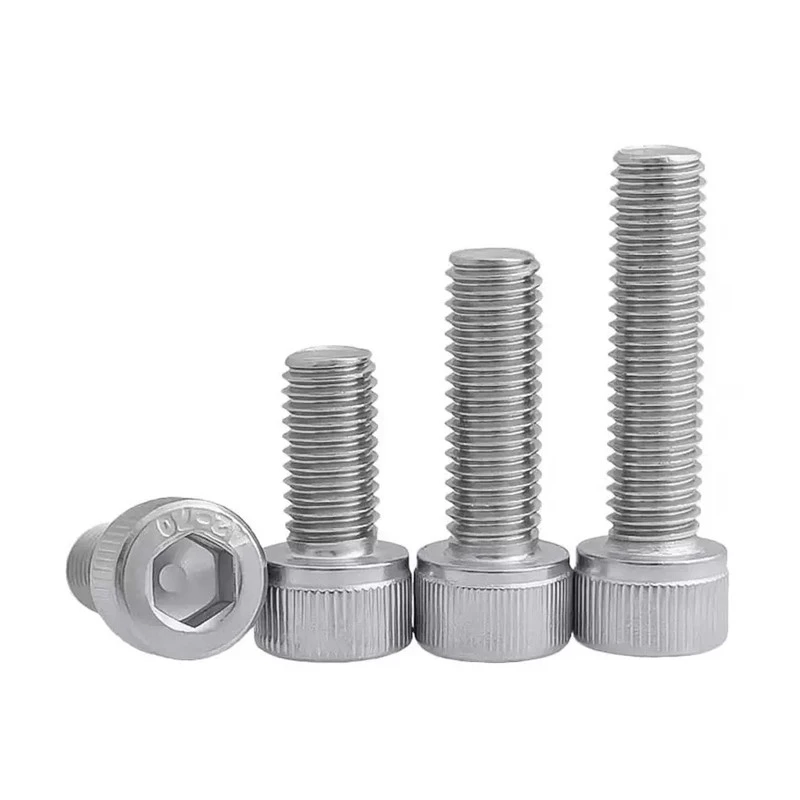
Let’s start with the basics most suppliers won’t always lay out. Threaded fasteners don’t come in a one-size-fits-all. The two most common core thread families are Unified Coarse (UNC) and Unified Fine (UNF), both developed in the U.S. and still the global standard for most industrial and commercial uses. UNC threads are the workhorses—they have wider, more spaced-out grooves. I’ve found them irreplaceable for heavy, dynamic loads, like attaching a car’s engine pan to its block or securing a structural beam in a residential deck. Why? The wider profile means more material on the thread’s peak and root, so they resist stripping under torque far better than finer threads. Last year, a small auto repair shop owner came to me with a stack of stripped bolts from a new transmission job. He’d used UNF threads because they looked “fancier” and smaller, but the fine grooves couldn’t handle the repeated vibration from the engine’s moving parts. Swapping to UNC-grade 8 bolts fixed his issue, and he’s been a regular customer ever since.
UNF threads, though, have their own superpower: they create a tighter clamp in thin materials or applications where space is tight. Think aerospace components, small electronics enclosures, or the fasteners that hold a door handle to a car frame. The finer pitch means more threads engage per inch, so you get a stronger hold without adding bulk. I supply a lot of these for drone manufacturers, for example. Drones are full of thin aluminum and carbon fiber parts that would crack if you used a wide, coarse thread. The UNF’s narrow grooves distribute the clamping force evenly across a smaller surface, so the delicate frames stay intact even during high-altitude maneuvers. But here’s the catch: fine threads are way more prone to getting cross-threaded. One wrong turn, and those tiny grooves can get damaged beyond use, so you have to be careful during installation.
Beyond UNC and UNF, there are other thread types that are built for specific jobs, and skipping them can lead to disaster. Metric threads are common in Europe and many global industrial settings, and they’re standardized by pitch, not just thread count. I work with a lot of import/export clients who mix up U.S. and metric fasteners all the time—last year, a construction company brought me a whole truckload of mismatched bolts because they assumed a 10mm metric bolt would thread into a 3/8-inch U.S. hole. It doesn’t, and that mistake cost them a full day of work on a bridge project. Metric threads are great for precision manufacturing, but they never play nice with U.S. standard holes, so always double-check your specs.
Then there are specialized threads, like API round threads for oil and gas pipelines, Acme threads for heavy machinery adjustments, and buttress threads for structural hold in high-load, single-direction applications. I recently supplied a set of Acme threaded rods to a factory that builds industrial conveyor systems. The factory’s old bolts had rounded off every time they adjusted the conveyor’s height to fit different product sizes. Acme threads have a sloped, trapezoidal profile that’s designed to handle heavy axial loads and make adjustments smoother and easier. It’s not a thread you’d use for a door hinge, but for its purpose, it’s unbeatable.
Once you’ve narrowed down your thread family, the next big choice is thread pitch. Pitch is the distance between two adjacent threads, and it directly ties to your application’s need for strength vs. adjustability. Coarse pitch (like UNC) is for when you need maximum torque resistance and the material you’re fastening is soft or thin. Fine pitch (UNF or metric fine) is for when you need a tight seal or precision alignment. But don’t forget about thread locking—when vibration is a constant issue, like in farm equipment or race cars, you’ll need a thread that’s designed to resist loosening, or you’ll end up with loose bolts halfway through a job. I keep a stock of self-locking nylon insert bolts for all my agricultural clients; the nylon insert grips the thread once it’s tightened, so even after hours of a tractor bouncing down a dirt road, the bolts don’t back out.
Material is another factor that works hand in hand with thread choice. A stainless steel thread for a marine dock won’t use the same pitch as a carbon steel thread for a garage shelf. Stainless steel is softer than carbon steel, so a fine thread would strip easily if it’s holding a heavy load, so we recommend a slightly coarser pitch for marine applications to distribute weight across more thread material. Galvanized steel threads, used for outdoor fencing and utility poles, need a pitch that can handle the galvanized coating’s thickness—too fine, and the coating will wear down too quickly, leading to rust.
Let’s talk about common mistakes I see all the time, because that’s where the right choice really matters. Last quarter, a customer working on a new roof came to me with a box of bolts that kept pulling through the roof’s metal panels. He’d bought standard UNC bolts, not realizing that roof fasteners use a special self-sealing thread with a wide, rounded head to spread the clamping force across the panel’s surface. Standard threads would pull through thin metal or soft materials because all the force is concentrated on a small point. I supplied him with the right thread for roof applications, and he didn’t have to redo half the job. Another mistake is ignoring thread lubrication. A dry coarse thread will snap under way less torque than a lubricated one, while a dry fine thread will cross-thread easily. Always check the manufacturer’s specs for lubrication, and when in doubt, ask a supplier— that’s what we’re here for.
When choosing threads, the first step I always advise is to map out your application’s non-negotiables. Is this going to be exposed to saltwater, vibration, extreme temperatures, or repeated adjustments? Is the material it’s fastening thick or thin? Does it need a tight seal, or just structural hold? Once you answer those, you can narrow down your thread type, pitch, and material. For example, a backyard deck: it’s exposed to weather, holds heavy people, and uses 2x lumber, which is soft. That means coarse thread, galvanized steel, a standard 8 or 10 thread count, and a hex head that’s easy to tighten with a power drill. A smartphone camera mount: it’s small, needs precision, won’t see extreme weather, and uses hard plastic and small metal parts. That means fine pitch metric threads, stainless steel, and a Phillips head for small tools. A wind turbine blade mount: it’s under massive dynamic load, exposed to salt and wind, and needs to stay tight for decades. That means API round threads, high-grade alloy steel, and a self-locking design to resist vibration.
As a supplier, my job isn’t just to sell you a bolt or a nut—it’s to make sure you get the one that won’t make you come back later to fix a mistake. I’ve built my business on listening to what my customers actually need, not just pushing the most expensive product. Last year, a startup making portable camping stoves came to me needing threads that could handle high heat, be lightweight, and still be strong. I sent them a sample of our high-temperature aluminum fine thread bolts, and they’ve ordered 50,000 pieces since. They told me before, they’d bought a competitor’s product that snapped mid-test because the thread pitch was too coarse for their small, light design. That’s the kind of mistake I help them avoid.
If you’re still unsure which thread is right for your application, don’t guess. A wrong choice can lead to project delays, safety issues, and extra costs that add up fast. As an experienced threaded fasteners supplier, I have access to a wide range of thread types, pitches, and grades, and I can help you pick the perfect fit for whatever you’re building. Whether you’re a contractor working on a residential deck, an engineer designing aerospace components, or a DIYer building a custom garage, I’m here to help you get the right fastener for your needs. Reach out to discuss your project, and we’ll find the right threaded solution for you.
Nut References:
- Machinery’s Handbook, 31st Edition, Industrial Press, 2020
- ASME B1.1-2019, Unified Screw Threads – Inch Series
- ASME B1.13M-2019, Metric Screw Threads (M Profile)
- Threaded Fasteners: Selection, Application, and Testing, SAE International, 2018
- Marine Fastener Design and Corrosion Resistance, American Society of Naval Engineers, 2021
Handan Hengmai Fasteners Manufacturing Co., Ltd.
Handan Hengmai Fasteners Manufacturing Co., Ltd. is one of the most professional threaded fasteners manufacturers and suppliers in China. With abundant experience, we are committed to providing customized fasteners made in China with competitive price. We warmly welcome you to buy bulk high quality threaded fasteners for sale here from our factory.
Address: Industrial Zone, West of Beiduanzhuang Village, Linmingguan Town, Yongnian District, Handan City, Hebei Province
E-mail: hmfasteners.cn@gmail.com
WebSite: https://www.hmfasteners.com/
