Hey folks, if you’re working with industrial machinery that runs on big synchronous motors, you know how wild vibration can throw a whole operation off. Last month, I got a call from a plant manager who said his 12,500 HP synchronous motor had been shaking so bad they had to shut down the line for emergency repairs—cost him over $80k in downtime and parts. That’s exactly why, as a large synchronous motor supplier, I spend half my time walking clients through why this stuff happens (and how we can help fix it before it blows your whole schedule). Let’s break this down plain and simple, no jargon overload. Large Synchronous Motor
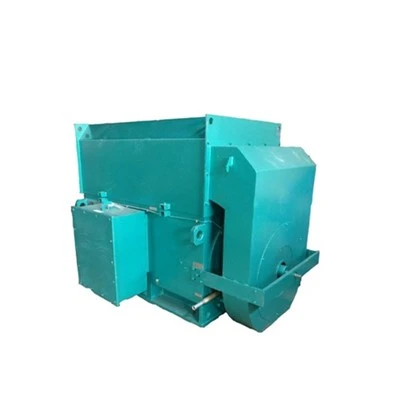
First off, let’s get one thing straight: a little vibration is normal, but when it’s crossing that 0.5 inches per second (ips) threshold on the bearing casings, that’s a red flag. Why? Because synchronous motors run on a set, locked speed thanks to their magnetic field locking in with the grid’s frequency—unlike induction motors that slip a little, so their vibration tends to be more forgiving. That lock is the key, and any disruption to that balance, alignment, or magnetic relationship will cause shaking. Let’s start with mechanical stuff because that’s the most common culprit we see day-to-day.
-
Shaft Misalignment: This is probably #1 on our list. When you’re installing a motor that’s paired with a pump, compressor, or gearbox, even a tiny offset or angle misalignment will tug at the shaft every time it spins. For big motors—we’re talking 5,000 HP and up—shafts are heavy, rigid, but not perfect. If you don’t laser-align those shafts to within 0.002 inches (that’s 50 micrometers) when you mount them, the vibration will build. Last quarter, we had a client who did a rough alignment with a straightedge, and within 3 weeks their motor bearings were wearing out 3x faster than they should. Pro tip: if you’re repositioning a load connected to the motor, don’t skip re-alignment. Even a slight shift of the pump base can throw everything off. Also, thermal misalignment is a big one—when the motor heats up during operation, its shaft expands, and if the coupling isn’t designed to account for that growth, you get more vibration once it’s running than when it’s cold.
-
Rotor Imbalance: Think of a bicycle wheel out of true—if the weight’s not evenly distributed, it shakes when you spin it. Same with a large synchronous motor’s rotor. Rotors for big units are heavy, often cast with uneven material, or if a repair was done (like replacing a winding bar), it might not be perfectly balanced. We do dynamic balancing on every rotor we ship out, but sometimes during operation, debris can stick to the rotor slots, or winding insulation can break down and shift weight. What’s a red flag here? Vibration that increases as the square of the speed—so if you bump the motor up from 1,000 RPM to 1,500 RPM, vibration goes up 2.25x. That’s classic imbalance. Another thing: if the rotor’s core is loose—those stacked steel laminations that make up the magnetic part—they can shift over time, throwing balance off. We had a 10,000 HP motor come back to us last year because the client thought it was a bearing issue, but turns out the laminations had worked loose, creating a 200-gram weight shift that caused vibration.
-
Bearing Issues: Bearings are the unsung heroes of any motor, and when they go bad, vibration follows. For large synchronous motors, we use either sleeve bearings (common for high-horsepower units) or rolling element bearings (for smaller big motors, like up to 5,000 HP). Sleeve bearings can get worn, have insufficient oil flow, or develop a “whirl” issue where the shaft spins inside the bearing instead of turning with it—this creates a specific high-frequency vibration. Rolling element bearings can have pitting on the balls or races from debris (even tiny metal shavings from installation), which causes vibration at the bearing’s natural frequency. Also, bearing housing looseness—if the bolts holding the bearing to the motor frame are torqued unevenly or come loose, that lets the bearing move, so shaking happens. We recommend checking bearing temperatures (they should be under 180°F for most units) regularly—if a bearing is running 20°F hotter than normal, it’s likely going to cause vibration soon.
Now, moving to magnetic causes—these are specific to synchronous motors, which is why they’re different from other motor types, and they’re often less obvious. Here’s the thing: synchronous motors rely on a uniform magnetic field in the stator and rotor to keep that speed locked. If that field is messed up, you get magnetic vibration.
-
Air Gap Irregularity: The air gap is the tiny space between the stator’s inner wall and the rotor’s outer surface—usually around 1 to 5 inches for big motors, depending on HP. If this gap isn’t uniform all the way around, you get uneven magnetic pull on the rotor. Why would the gap change? Sometimes the stator frame warps from heat or improper installation, or the rotor shaft bends (even a slight bend, like 0.01 inch, can make the gap uneven). We had a client last year who’d run their motor at full load for 2 years, and the stator frame had warped a little, so the gap was 1 inch on one side and 1.5 inches on the other. The magnetic pull was pulling the rotor off-center, causing constant vibration. Unlike mechanical imbalance, this vibration is usually at twice the line frequency (for 60 Hz grids, that’s 120 Hz) because the magnetic field reverses polarity twice per cycle.
-
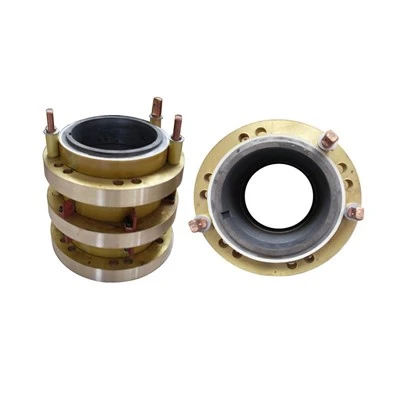
Unbalanced Magnetic Pull (UMP): This is basically the same as air gap irregularity but more extreme—if the gap is off by enough, the magnetic force pulling the rotor to one side is uneven, so the rotor “wobbles” slightly. UMP can also come from faulty stator windings—if one phase is shorted, or a winding is damaged, that creates an uneven magnetic field. For synchronous motors, since the rotor is DC-excited (we add a separate DC voltage to the rotor to create its magnetic field), a problem with the exciter can also cause uneven rotor magnetism. We do a magnetic flux test on every motor we service, which checks for these unbalanced fields before they cause vibration.
-
Harmonic Currents: If your motor is connected to a variable frequency drive (VFD)—super common for big industrial motors to adjust speed—harmonics in the current can mess with the magnetic field. Harmonics are extra frequency components that don’t belong, and they can vibrate the motor frame at those harmonic frequencies. Even without a VFD, if the grid has harmonics (from other equipment like welders or variable speed pumps), that can cause vibration in the synchronous motor. Unlike other magnetic issues, this vibration is at a frequency that’s a multiple of the line frequency—for example, 3x or 5x 60 Hz, so 180 Hz or 300 Hz. We recommend filtering the grid or the VFD output if you’re seeing this kind of vibration.
Wait, let’s not forget structural issues—stuff outside the motor itself, but that amplifies vibration. The motor base is a big one. If the base isn’t rigid enough, or it’s mounted on flexible foundations (like old concrete pads that are cracked, or wood structures), the vibration will amplify instead of dissipate. A few years back, we supplied a 15,000 HP motor for a paper mill that had a wooden base—within a month, the whole mill shook so bad that loose hardware was falling off walls. We worked with them to add steel reinforcement to the base, and the vibration dropped by 60%. Also, driven equipment issues—if the pump or compressor the motor’s turning has its own vibration, that can transfer back to the motor. For example, a reciprocating compressor has pulse loads, which will shake the motor if the coupling isn’t a flexible type that absorbs that pulse.
Now, why does this matter to you? Because I’ve seen clients ignore early vibration signs, and end up with a motor that has to be taken apart, rewound, or replaced—costing way more than fixing the issue upfront. Our team specializes in large synchronous motors, so when a client calls us with vibration issues, we start with a few quick checks: first, measure vibration on the bearing housings in both radial and axial directions, then check alignment, air gap, and magnetic field. We also provide preventive maintenance plans that include regular balancing, alignment checks, and magnetic testing to catch issues before they cause downtime.
A lot of folks ask me, “Is vibration normal for a big synchronous motor?” The short answer: yes, but only if it’s within the manufacturer’s limits (usually <0.3 ips for standard operation). If it’s above that, it’s not something to brush off. Last week, a client sent us vibration data that was 0.8 ips—we told them to shut it down within 48 hours, and when we inspected it, we found a loose stator winding that was causing magnetic pull. If they’d waited another week, that winding would have arced, destroying the rotor and stator, and costing them over $200k in repairs plus a week of downtime.
Here’s the thing: every large synchronous motor is built for a specific application, so vibration causes can vary. A 5,000 HP motor driving a ball mill will have different vibration issues than a 20,000 HP motor driving a pipeline compressor. That’s why having a supplier that knows these motors inside and out is a game-changer—we don’t just sell you a motor, we stand by it and help you troubleshoot when things go sideways.
If you’re dealing with persistent vibration in your large synchronous motor, or you’re planning to install a new unit and want to make sure it’s set up right, don’t mess around. We’re here to walk you through diagnosis, offer on-site inspections, and provide the parts and support to get your motor running smooth. Just reach out to us, and we’ll get you the help you need fast.
DC Motor References:
- IEEE Standard 112-2017, Test Procedure for Polyphase Induction Motors and Generators
- NEMA MG 1-2022, Motors and Generators: Part 12 – Vibration Measurement
- Large Synchronous Motors: Design, Application, and Maintenance, EPRI Press, 2021
- Vibration Analysis of Rotating Machinery, Ralph G. Kirk, CRC Press, 2019
Xian Putai Electric Motor Equipment Co., Ltd.
Xian Putai Electric Motor Equipment Co., Ltd. is one of the most professional large synchronous motor manufacturers and suppliers in China, also supports customized service with low price. Welcome to buy advanced large synchronous motor in stock here from our factory. If you have any enquiry about quotation, please feel free to email us.
Address: Haibo Guangchang Fengcheng Nine Road Economical & Technological Development District Xi’an City Shaanxi Province – China
E-mail: sales@putaimotor.com
WebSite: https://www.putaimotor.com/
