As a supplier of JP standard plug pins, I am often asked many technical questions about these products, and one of the most frequently asked questions is, "What is the voltage of a JP standard plug pin?" This question is crucial not just for understanding the technical specification but also for ensuring safety and functionality in various applications. In this blog, I’ll delve into the voltage characteristics of JP standard plug pins, their significance, and related factors that you should be aware of. Jp Standard Plug Pin

Understanding JP Standard Plug Pins
Before we jump into the voltage details, let’s first have a basic understanding of what JP standard plug pins are. "JP" typically refers to Japanese standards, which have their own set of regulations and specifications for electrical plugs and sockets. These plug pins are designed to fit into JP – standard sockets and are widely used in Japan and in some international applications where Japanese electrical appliances are involved.
Japanese electrical plugs generally come in two common types: the two – pronged ungrounded plug and the three – pronged grounded plug. The two – pronged plug is used for most low – power household appliances, while the three – pronged plug is required for larger, grounded appliances that need a higher level of safety.
Voltage of JP Standard Plug Pins
The standard voltage for JP (Japanese) electrical systems is 100V at a frequency of 50Hz or 60Hz. The reason for this dual frequency is a historical one. In the northern part of Japan, the power grid operates at 50Hz, while in the southern part, it operates at 60Hz. This difference dates back to the early days of electrical system development when different generating equipment and technologies were adopted in different regions.
The JP standard plug pins are designed to work within this 100V electrical environment. The voltage of 100V is considered low compared to some other countries, such as the United States which has a standard voltage of 120V, and many European countries which use 230V. This lower voltage has several implications for both the design and use of electrical devices.
Why 100V?
The choice of 100V in Japan was primarily based on historical and technological considerations. In the early days of electrical development, lower voltages were easier to manage and distribute. The electrical infrastructure was built around this lower voltage standard, and over time, it became deeply entrenched in Japan’s electrical system.
One of the advantages of a 100V system is that it offers a relatively high level of safety. Lower voltage means less risk of electric shock, which is especially important in a domestic environment. However, it also means that electrical appliances need to draw more current to achieve the same power output as they would in a higher – voltage system. For example, a 1000 – watt appliance in a 100V system would need to draw 10 amps of current (using the formula P = VI, where P is power in watts, V is voltage in volts, and I is current in amps), while in a 230V system, it would only need to draw about 4.35 amps.
Technical Specifications and Design Considerations
The design of JP standard plug pins is carefully regulated to ensure that they can safely handle the 100V voltage. The materials used for the plug pins are typically copper or a copper alloy, which are good conductors of electricity. The thickness and shape of the plug pins are also standardized to ensure a proper fit into the corresponding sockets, minimizing the risk of overheating or sparking due to poor contact.
The insulation materials used in the plug and the cord are designed to withstand the 100V voltage without breaking down. They also need to meet certain safety standards to prevent electrical hazards such as short – circuits. For example, the insulation should have a minimum dielectric strength that can resist the applied voltage and protect users from exposure to electrical current.
Using JP Standard Plug Pins in Different Environments
When using JP standard plug pins outside of Japan or when using non – Japanese appliances in Japan, voltage compatibility becomes a major issue. If you try to use a JP standard plug pin in a country with a higher voltage, such as a 230V European system, it can lead to overheating, damage to the appliance, or even a fire hazard.
Conversely, if you bring a high – voltage appliance from a 230V country to Japan and plug it into a 100V socket without proper voltage conversion, the appliance may not operate at its full capacity or may not work at all. Therefore, it is essential to use a voltage converter or transformer when using JP standard plug pins in a different voltage environment or vice versa.
Safety Precautions
As a supplier of JP standard plug pins, I always stress the importance of safety. When using these plug pins, users should ensure that the electrical appliances are in good condition and that the plug pins and sockets are clean and free from any damage. Any signs of wear, such as frayed cords or loose plug pins, should be addressed immediately.
Another important safety measure is to use the correct fuse or circuit breaker. In a 100V system, the fuse rating should be selected based on the current requirements of the appliance. Using an incorrect fuse can lead to overloading and potential electrical fires.
Quality Assurance in Our Products
At our company, we take quality assurance very seriously. Our JP standard plug pins are manufactured to meet or exceed the Japanese electrical standards. We use high – quality materials and advanced manufacturing processes to ensure the reliability and safety of our products.
We conduct a series of tests on our plug pins, including electrical conductivity tests, insulation resistance tests, and temperature rise tests. These tests help us to identify any potential issues and ensure that our products can perform well in a 100V electrical system over a long period of time.
Potential Applications
JP standard plug pins are used in a wide range of applications, from small household appliances like TVs, radios, and charging devices to industrial equipment in some cases. Their low – voltage design makes them suitable for applications where safety is a top priority, especially in environments where there is a high risk of human contact with electrical components.
Conclusion
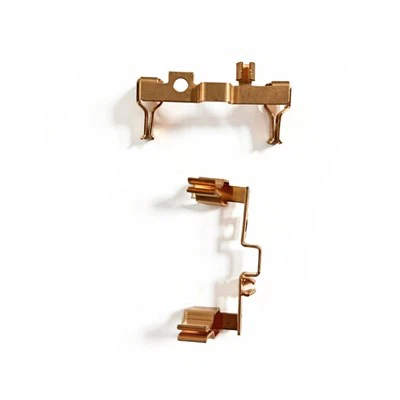
In conclusion, the voltage of a JP standard plug pin is 100V, which is characteristic of the Japanese electrical system. This lower voltage has its roots in historical development and offers certain safety advantages, but also has implications for electrical appliance design and use in different environments. As a supplier, we are committed to providing high – quality JP standard plug pins that can safely and effectively operate within this 100V environment.
Sa Standard Plug Pin If you are in the market for JP standard plug pins for your projects or applications, I would be more than happy to discuss your requirements. Whether you need a small quantity for a one – off project or a large – scale supply for mass production, our team can provide you with the right solutions. Please feel free to reach out to us to start a procurement discussion.
References
- Electrical and Electronics Engineering Handbook, Third Edition
- Japanese Electrical Standards and Regulations, published by the Japanese Ministry of Economy, Trade and Industry
Dongguan Fangrun Metal Products Co., Ltd.
We’re well-known as one of the leading jp standard plug pin manufacturers in China, specialized in providing high quality customized products. Please feel free to buy discount jp standard plug pin made in China here from our factory. For quotation and free sample, contact us now.
Address: New Town Industrial Zone,Xiegang Village,Xie Gang Town,Dongguan City
E-mail: 825556703@qq.com
WebSite: https://www.fangrunpin.com/
